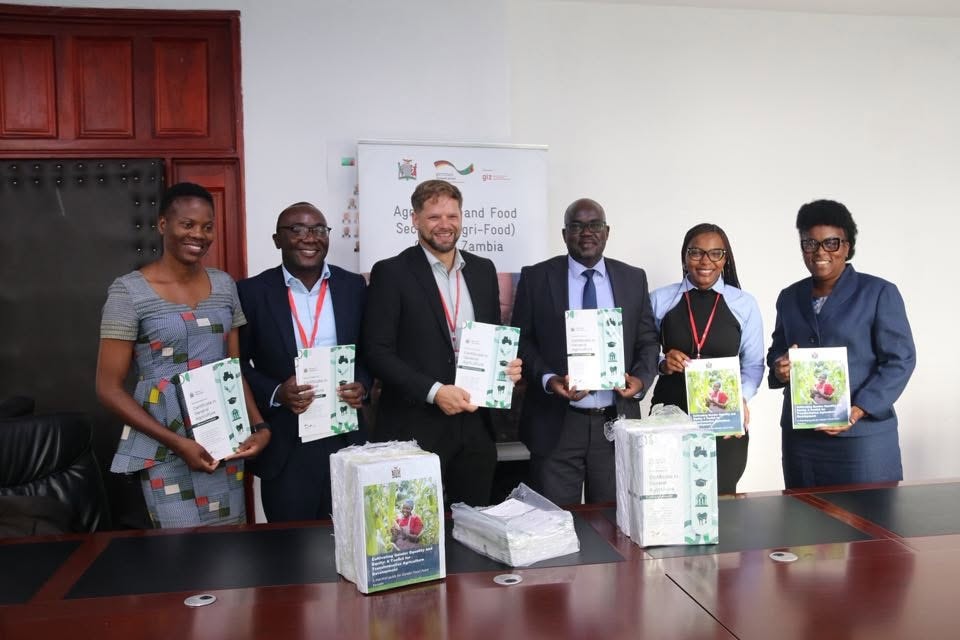
GIZ HANDS OVER REVISED AGRICULTURE CURRICULUM AND GENDER TOOLKIT
Home News Home Affairs
Posted by admin on December 16, 2025 at 6:01 AM
The German Agency for International Cooperation (GIZ),
through its Climate‑Resilient Agri‑Food Systems (CREATE) project, has handed
over the Revised Certificate in General Agriculture Curriculum and a Gender
Mainstreaming Toolkit to the Ministry of Agriculture.
During the documents hand over Ministry of Agriculture Director
of Human Resource and Administration Lemmy Kawambwa, expressed gratitude to GIZ
for its continued collaboration, noting that the revised curriculum will help
build a skilled, inclusive and climate‑resilient agricultural workforce.
He said the updated curriculum equips future extension
officers with Climate‑smart agricultural skills, Practical, hands‑on training, Market‑relevant
competencies and Knowledge aligned with current industry needs
He added that the Gender Mainstreaming Toolkit will
strengthen the Ministry’s ability to integrate gender considerations into
agricultural planning, extension services and programme implementation.
Leading the GIZ delegation, CREATE Component Manager Hendrik
Hoffmann said the handover reflects a shared commitment to building resilient
and inclusive agri‑food systems.
“These documents are practical tools that will shape how
agricultural professionals are trained and how gender considerations are
integrated into day‑to‑day operations,” he said.
The Revised Certificate in General Agriculture Curriculum
includes Climate‑smart and sustainable farming practices, Responses to emerging
climate and environmental challenges and Training aligned with labour market
and industry demands
The Gender Mainstreaming Toolkit will guide the Ministry in
ensuring that women, men and youth benefit equitably from agricultural
programmes.
The CREATE project continues to support the Ministry of
Agriculture in Strengthening extension services, enhancing agricultural
education and Building climate‑resilient food systems across Zambia
Related Articles



Recent News
-
 Police Arrest Suspect In Mufulira Assault Case
-
 215 Tazara Officers Promoted Ahead Of Elections
-
 Calisthenics Display At Trade Fair
-
 Man Nabbed In Mazabuka Murder
-
 Gov’t Flags Off Wetland Cropping Inputs Nationwide
-
 Tcz To Introduce Teacher Licensure Exams
-
 Kalabo Urges Public Education On New Pensions Act
-
 Ab Bank Zambia Appoints New Ceo

Popular News

Top Trending
-
Police Arrest Suspect In Mufulira Assault Case
-
215 Tazara Officers Promoted Ahead Of Elections
-
Calisthenics Display At Trade Fair
-
Man Nabbed In Mazabuka Murder
-
Gov’t Flags Off Wetland Cropping Inputs Nationwide
-
Tcz To Introduce Teacher Licensure Exams
-
Kalabo Urges Public Education On New Pensions Act
-
Ab Bank Zambia Appoints New Ceo